01Specification
Building human HSCs
Define how stage-specific BMP, TGFβ, WNT, and NOTCH signaling guides human pluripotent stem cells toward hemogenic mesoderm, hemogenic endothelium, and blood-forming stem-cell potential.
Research atlas
We reconstruct developmental roadmaps from pluripotency to blood and immune-cell identity—then use those maps to regenerate blood, engineer immunity, and model disease.
Explore the complete atlas ↓Complete figure
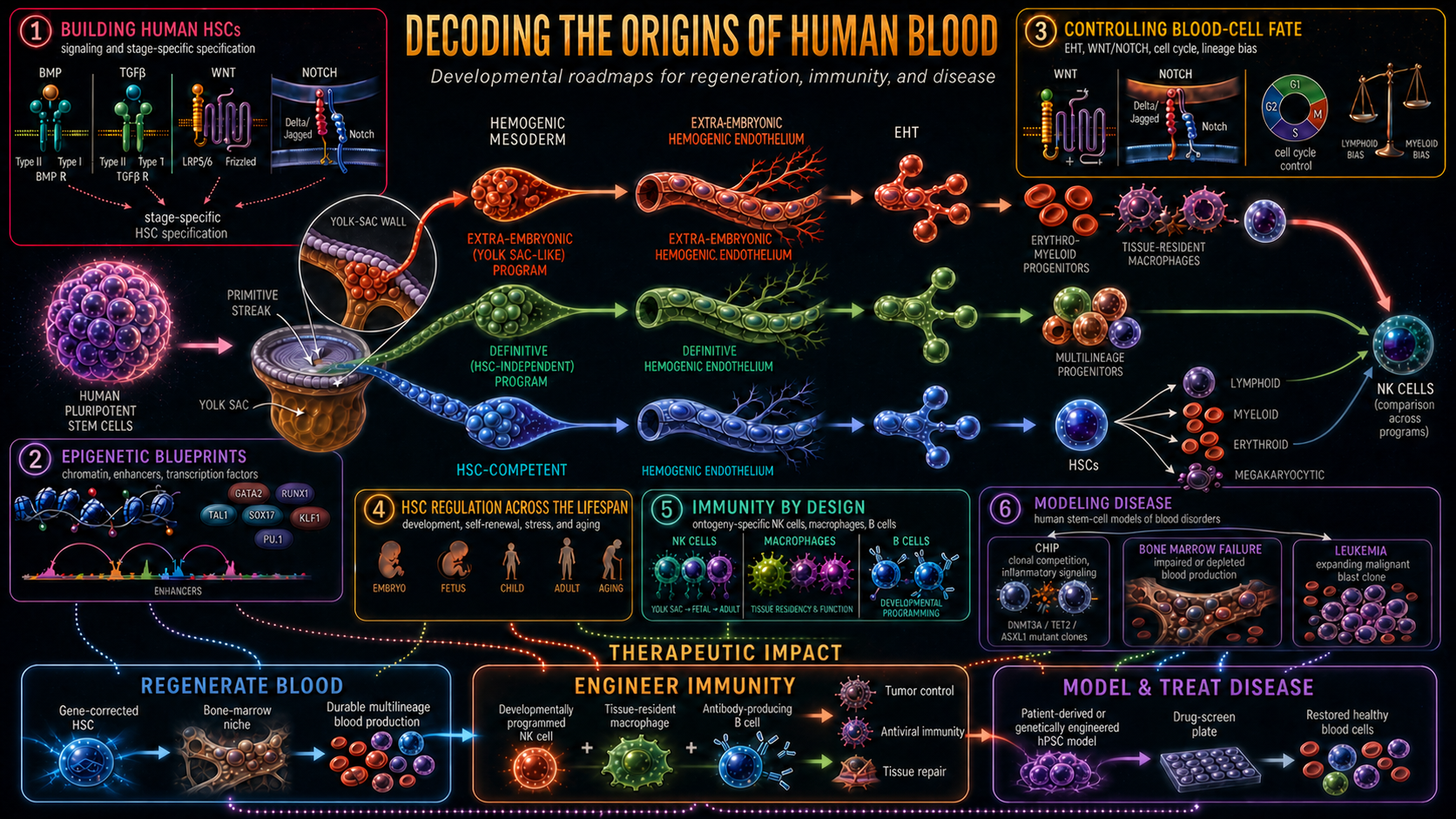
On smaller screens, scroll across the figure or open the full-resolution image to zoom.
Six interconnected programs
Define how stage-specific BMP, TGFβ, WNT, and NOTCH signaling guides human pluripotent stem cells toward hemogenic mesoderm, hemogenic endothelium, and blood-forming stem-cell potential.
Map the chromatin states, enhancers, and transcription-factor networks that establish developmental competence and control the transition from endothelial identity to blood.
Dissect how endothelial-to-hematopoietic transition, signaling, cell-cycle state, and lineage bias shape erythroid, myeloid, lymphoid, and tissue-resident immune outcomes.
Study how hematopoietic stem cells acquire, maintain, and lose function from embryonic development through fetal life, adulthood, stress, and aging.
Use developmental programs to generate and refine pluripotent stem cell-derived NK cells, macrophages, and B cells for tumor control, antiviral immunity, and tissue repair.
Build patient-specific and genetically engineered stem-cell models of clonal hematopoiesis, bone-marrow failure, and leukemia to reveal mechanisms and test therapeutic strategies.
Translational direction